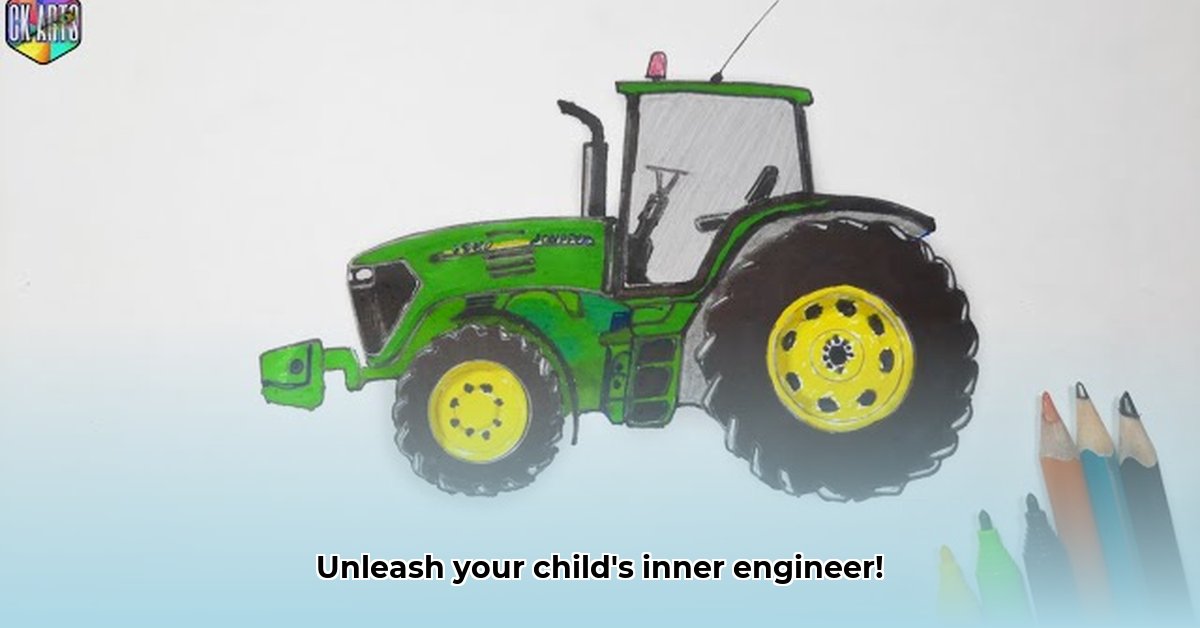
Let's be honest: kids love tractors! John Deere, a globally recognized name in farm equipment, has cleverly capitalized on this fascination with its free, downloadable tractor drawings and coloring pages. This initiative offers a fantastic entry point into introducing children to the world of agriculture. However, a significant opportunity exists to enhance this program and leverage its potential to cultivate a deeper understanding of sustainable farming practices. This article will examine the current state of John Deere's initiative, identify key research gaps, and propose actionable steps to elevate its impact on children's agricultural literacy. For even more fun, check out these John Deere pedal tractors.
What John Deere Offers Now: A Solid Foundation
John Deere currently provides a collection of printable tractor drawings and coloring pages, readily accessible online. These resources undoubtedly engage children's creativity and spark their imaginations. The vibrant images introduce children to the visual world of farming. However, a critical element is missing: a direct and explicit connection to sustainable agricultural practices. While the drawings are entertaining, they currently lack the educational depth needed to foster a comprehensive understanding of environmentally responsible farming.
Uncovering the Missing Pieces: Research Gaps
To accurately assess the effectiveness of John Deere's initiative, more research is urgently needed. We lack crucial data points. For example: how many children are using these resources? How much time do they dedicate to coloring or interacting with the materials? Which age groups show the highest engagement levels? Critically, what are the learning outcomes? Are children gaining a deeper understanding of agricultural processes, or are the drawings simply a casual pastime?
The absence of quantifiable engagement metrics and qualitative feedback from children, parents, and educators significantly limits our ability to fully evaluate the program's impact. Without robust data, we are unable to definitively assess the initiative's true effectiveness. Furthermore, benchmarking John Deere's program against other similar children’s agricultural education initiatives could provide valuable insights into its strengths and weaknesses and reveal opportunities for improvement.
Actionable Steps Toward a Sustainable Future
The potential of John Deere's initiative is undeniable. By implementing the following strategies, we can transform these simple drawings into powerful tools for educating the next generation about sustainable agriculture.
John Deere's Role: Cultivating Change
Integrate Sustainability (Short-Term): Subtly incorporate elements of sustainable farming practices into the drawings. Images depicting solar-powered tractors, efficient irrigation systems, or diverse crops could subtly yet effectively introduce children to environmentally responsible farming techniques. This approach enhances the existing resources without drastically altering their appeal.
Develop a Comprehensive Program (Long-Term): Create a multi-faceted educational program incorporating the drawings into interactive online games, engaging workbooks, and potentially partnerships with educational institutions. This holistic approach ensures a sustained and impactful learning experience.
Educators and Parents: Partners in Education
Foster Discussion (Immediate Action): Utilize the existing drawings as a springboard for conversations about farming, food origins, and environmental responsibility. Turn coloring time into a valuable learning experience.
Advocate for Curriculum Integration (Long-Term): Promote the inclusion of agricultural sustainability in school curricula. This systemic approach ensures that children receive comprehensive education on this crucial topic.
NGOs and Sustainability Organizations: Collaboration for Impact
Resource Development (Short-Term): Collaborate with John Deere to develop educational materials that blend engaging visuals with clear, concise messaging about sustainable farming, leveraging expertise to enhance the educational value.
Longitudinal Research (Long-Term): Conduct comprehensive evaluations to measure the long-term effects of incorporating sustainability lessons into agricultural education. This crucial research establishes a strong evidence-base for program improvement and future initiatives.
Researchers: Guiding the Way
Evaluate Impact (Immediate Research): Investigate how children's attitudes and knowledge about agriculture and sustainability evolve after interacting with the enhanced resources. This empirical approach ensures that future improvements are data-driven.
Develop Best Practices (Long-Term Studies): Conduct research to establish evidence-based best practices for teaching sustainability in agriculture, ensuring that educational materials are effective and engaging.
A Brighter Future: Reaping the Rewards of Collaboration
John Deere's tractor drawings represent a significant opportunity to engage children with the world of agriculture and foster a deep understanding of sustainable practices. By taking the actionable steps outlined above, we can collectively elevate this initiative, cultivating a generation of environmentally conscious and socially responsible individuals. The future of sustainable agriculture hinges on educating today's youth; let us work together to make this a reality.